top of page
Shaping Innovation
All Posts
Reverse Engineering 101: Physical Part → Editable CAD
Every engineering team eventually runs into the same problem: a physical part exists, but no usable file for it does. A discontinued component, legacy equipment with no manufacturer support, a part that was designed by someone no longer with the company — the object is real, but there's no way to modify, reproduce, or manufacture it without starting from scratch. Reverse engineering is the process of closing that gap: turning a physical part into an accurate, editable CAD mod

i-Meca3D
Aug 142 min read
Design for 3D Printing: 10 Rules to Avoid Failed Prints
A CAD model that looks correct on screen is not the same as a part that will print correctly. Between the render and the finished object sits a set of physical constraints — layer adhesion, thermal behavior, unsupported geometry — that most CAD software will not warn you about. This is the gap where prototypes fail, deadlines slip, and budgets get eaten by reprints. Below are ten design rules we apply to every file we review before it goes to print, whether it comes from a st
i-Meca3D
Jul 303 min read


3D Printing Warping: Why Your Enclosure Warps and How to Prevent
If you've printed enough enclosures, you've seen it happen: a perfectly sliced print finishes, looks flawless on the bed, and then twenty minutes later the corners have lifted, the walls have bowed, and what should have been a flat-sided box now looks like it's trying to curl into a smile. This is 3D printing warping, and it's one of the most common — and most misunderstood — failures in FDM printing. Most people blame the printer — a loose belt, a drafty window, "bad" filame
i-Meca3D
Jul 95 min read


How to Design Snap-Fit Joints for 3D Printing
Snap-fit joints are one of the most useful tools in a designer's toolkit. They let you join two parts without screws, adhesives, or welds — just a bit of elastic deformation and a satisfying click. For 3D printed parts, snap-fits are especially valuable: they reduce assembly time, cut down on hardware costs, and allow enclosures or assemblies to be opened and closed repeatedly for maintenance or repair. But designing a snap-fit that actually works with 3D printing is trickier
i-Meca3D
Jul 76 min read


Mastering Effective 3D Printing Design Tips
3D printing transforms ideas into tangible objects. To get the best results, you must master effective design principles. This process requires understanding the technology’s limitations and strengths. By applying clear design strategies, you can create parts that are functional, durable, and visually appealing. Essential 3D Printing Design Tips Start with the basics. Knowing the key design tips helps you avoid common pitfalls and improve print quality. Understand printer cap
i-Meca3D
Jun 113 min read


Benefits of PLA Filament in 3D Printing
When you start working with 3D printing, choosing the right material is crucial. PLA filament stands out as one of the most popular options. It offers a range of benefits that make it ideal for many applications. Whether you are creating prototypes, custom parts, or functional products, PLA can meet your needs effectively. Why Choose PLA Filament? Key Benefits Explained PLA, or polylactic acid, is a biodegradable thermoplastic derived from renewable resources like corn starch
i-Meca3D
Jun 23 min read


PLA vs PETG: Which 3D Printing Material Should You Choose?
Understanding strength, durability, printability, thermal resistance, and real-world engineering applications. Introduction Choosing the correct material is one of the most important decisions in any 3D printing project. A well-designed part can still fail if the material does not match the mechanical, thermal, or environmental requirements of the application. Among desktop FDM 3D printing materials, PLA and PETG are two of the most widely used filaments due to their affordab
i-Meca3D
May 134 min read


PLA Filament for 3D Printing
Properties, Variations, Applications & Specifications Introduction Polylactic Acid (PLA) is the most widely used filament in FDM/FFF 3D printing. Manufactured primarily from renewable plant-based resources such as corn starch and sugarcane, PLA is known for its excellent printability, smooth surface finish, low warping behavior, and wide material availability. Due to its ease of use and reliable performance, PLA is commonly used for prototyping, decorative products, education
i-Meca3D
May 83 min read

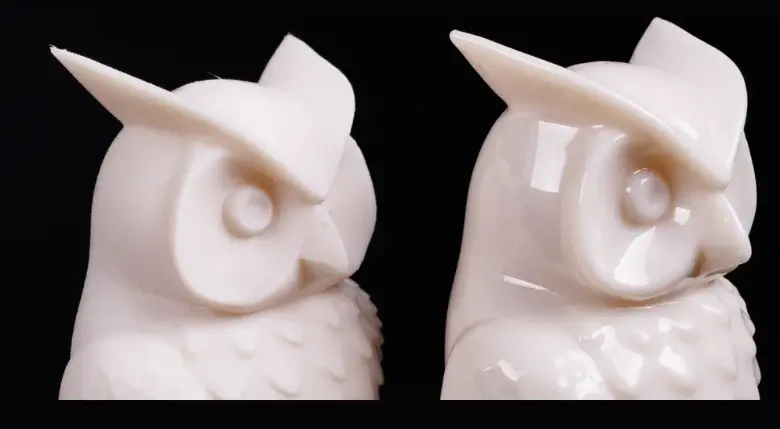
Complete Guide to 3D Printing Materials (FDM Filaments)
3D printing has evolved rapidly, and one of the most critical factors determining print quality, durability, and application suitability is the material (filament) you choose. In FDM (Fused Deposition Modeling) printing, different filaments offer vastly different mechanical, thermal, and aesthetic properties. This guide breaks down the most commonly used 3D printing filaments, their characteristics, advantages, disadvantages, and real-world applications, helping you or your c
i-Meca3D
Apr 43 min read


Exploring 3D Printing Services in Mechanical Engineering
3D printing has transformed the landscape of mechanical engineering, offering innovative solutions that were once considered impossible. This technology allows engineers to create complex geometries, reduce material waste, and accelerate the prototyping process. In this blog post, we will explore the various 3D printing services available in mechanical engineering, their applications, benefits, and the future of this exciting technology. Understanding 3D Printing Technology 3
i-Meca3D
Nov 26, 20254 min read


Innovative Mechanical Product Design for Plastic Enclosures
In today's fast-paced world, the demand for efficient and durable plastic enclosures is on the rise. These enclosures are essential for protecting sensitive electronic components, ensuring safety, and enhancing the aesthetic appeal of various products. The challenge lies in designing these enclosures to be both functional and visually appealing while also considering sustainability and cost-effectiveness. This blog post explores innovative mechanical product design strategies
i-Meca3D
Nov 26, 20254 min read


CNC Services and Their Impact on Manufacturing Efficiency
In the ever-evolving landscape of manufacturing, efficiency is paramount. Companies are constantly seeking ways to improve production processes, reduce waste, and enhance product quality. One of the most significant advancements in this field is the adoption of CNC (Computer Numerical Control) services. These services have transformed traditional manufacturing methods, enabling businesses to achieve higher precision and efficiency. In this blog post, we will explore the vario
i-Meca3D
Nov 26, 20254 min read
bottom of page